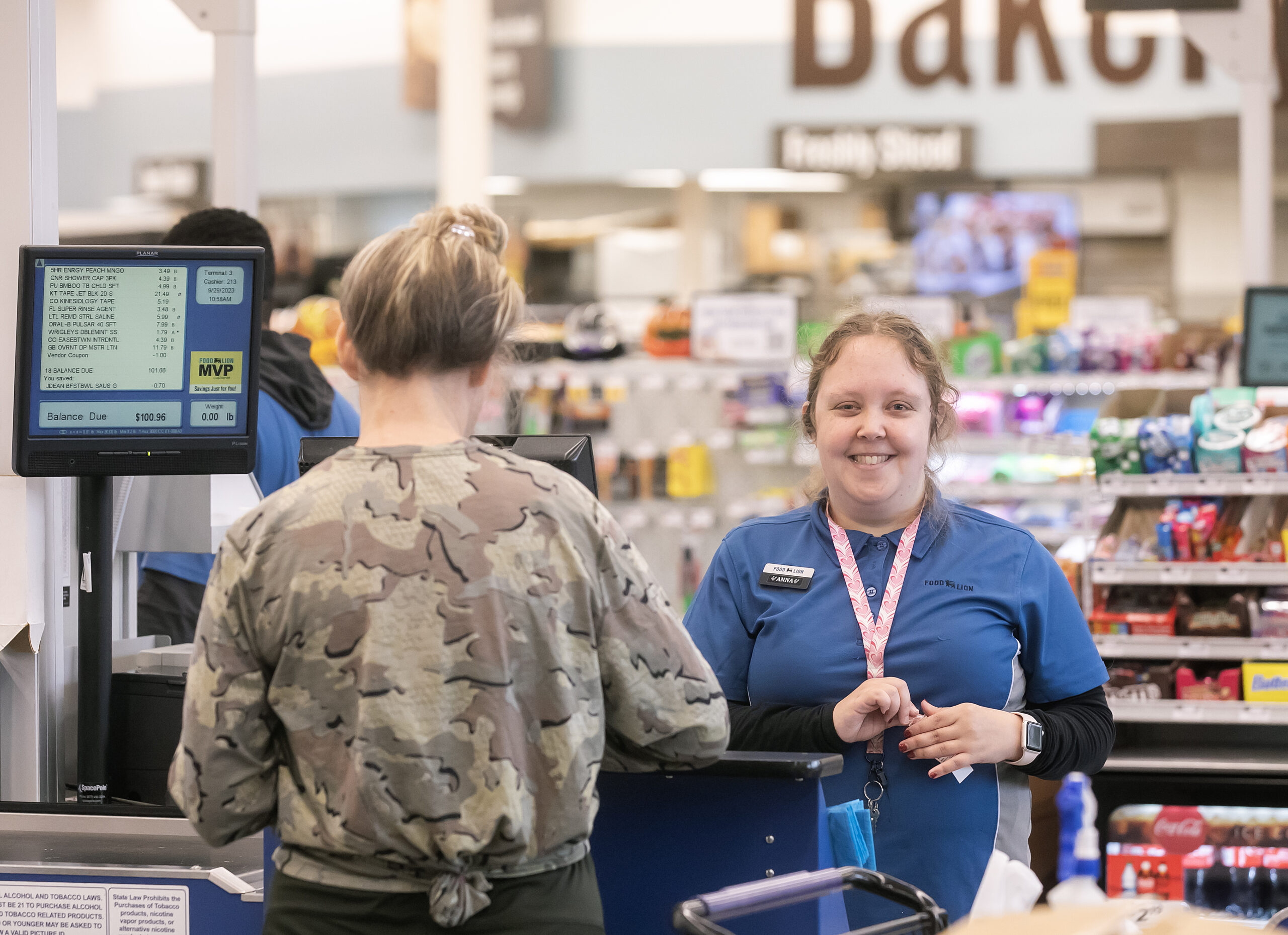
Hiring a person with a disability might be the missing puzzle piece to completing your team.
As a business owner, you’re always seeking dedicated and hardworking employees. People who will be ambassadors for your company. Workers who want to be there and won’t leave a month after being hired. They’re on time and professional. Your customers like them. So does the rest of your team.
It only makes sense that your workforce reflects the diversity of your customer base. Now consider that 20% of the U.S. population – about 1 in 4 people – has a disability. It might be asthma or diabetes. Autism or a physical limitation. Lupus or a food allergy.
A disability should not interfere with a person’s ability to find meaningful work.
“We don’t focus on a person’s disability; we focus on their ability,” said Vickie Greatwood, Director of Supported Employment at VersAbility Resources.
Greatwood and her team match qualified candidates with employers.
“We’ve placed individuals in all types of jobs,” she said. VersAbility’s employer partners include Amazon, Computer Concepts, Delta Airlines, Garrett Realty Partners, Muddy Marley’s, Sodexo, and more.
Both the employer and the employee benefit.
It’s a win-win as:
- Anyone can apply to a company posting, leaving the employer to do the vetting. VersAbility vets potential employees before they apply for a job and sets up individuals for success once hired.
- Employers value accountability. When an employer partners with VersAbility, a dedicated Employment Specialist trains alongside the new hire onsite at no cost to the employer. The Employment Specialist remains with the new employee to facilitate all training. VersAbility holds the new employee accountable.
- Businesses that invest in people with disabilities are eligible to apply for the Workforce Opportunity Tax Credit.
Not one size fits all
When an individual with a disability seeks employment, VersAbility does a deep dive into what kind of job best aligns with that person’s likes and dislikes.
“Our services are driven by their goals and their industry because we’re person-centered,” Greatwood said. “We never say, ‘Here’s an available job. Just go for it.’ We make sure it’s what the individual wants to do. There are no career fields we shy away from.”
Some individuals with disabilities thrive on sticking to a routine. They embrace structured environments and repetitive tasks, making them especially suitable for certain roles. A Cambridge University study found strong links between autism and aptitude at tasks that require attention to detail. An employee who has autism can often remain focused for an incredibly long period of time.
“Some people with disabilities often thrive on routine, whereas somebody else might get bored with it,” Greatwood said. “There might be someone in that talent pool who is a diamond in the rough. It might be that the job is a niche, but it is in that person’s wheelhouse.”
In “Disability as a Source of Competitive Advantage,” Forbes Magazine reported that major corporations recruit neurodiverse employees for quality control, cybersecurity, and code checking. People with dyslexia often spot anomalies that others miss when analyzing data. The 2023 story notes, “The point is not that a disability is always an advantage but that with various types of jobs—probably more than most employers realize—certain types of disability may suit the work requirements.”
Set up for success
Employers worry about liability. That’s among the top reasons why some employers hesitate to hire a person with a disability. They’re concerned about an employee getting hurt on the job.
Again, that layer of support an Employment Specialist provides minimizes risk.
“We know the individuals we serve,” Greatwood said. “We know their work history. We observe them in work scenarios. We never want to set up anybody for failure.”
Employment Specialists understand the demands of the job and reinforce safety protocols.
“The benefit to the employer is that the individual they hire comes with support, and that’s at no cost to them,” Greatwood said. “They don’t have to be the ones watching over a new employee. We’re doing that for them. We’re holding that employee accountable.”
Employees you can count on
Since the pandemic, many companies have struggled to retain workers. Because so many people with disabilities thrive on routine, they often remain in jobs long term.
“They like having a place to go to that’s the same every day, something to call their own,” Greatwood said. “We have some people who have been in their position for 15 to 20 years.”
VersAbility’s Employment Specialists continue to check in with employees regularly, but more often than not, those employees need no special support.
In 2024, 74% of the employees VersAbility placed with employers achieved perfect attendance on the job.
A Holistic Approach
Greatwood asks employers to email her with a link to their job postings and a point of contact. Many employers turn to VersAbility multiple times to find new talent.
“Sometimes we’re the initiators; sometimes employers are,” she said. “If an individual wants to do it, we connect them. We don’t push anybody to take a job we don’t want to take.”
Greatwood and her team look at candidates holistically. They understand the job criteria and remove any barriers to success. If transportation is a concern, they make sure the individual can get to and from work before the employee accepts the position.
Sometimes people with disabilities struggle in a traditional interview setting. VersAbility addresses that, too.
“Our focus is competitive employment, which means with reasonable accommodations and the support of a job coach, the individuals we work with can compete with any other applicant,” Greatwood said
Many employers prefer open interviews, meaning they see the prospective employee in action rather than deciding based on a Q&A—that way, they witness firsthand what a person can do and how fast that person can learn.
The bottom line
Addressing the bottom line is typically the top concern of any business.
Hiring people with disabilities can be a strategic win for businesses.
When companies aim to be inclusive by making people with disabilities part of their workforce, it often creates a ripple effect. Employees feel better about the company and their work culture. Rather than becoming competitive with their peers, they often become collaborative.
Customers typically value companies that foster inclusivity. In today’s competitive, crowded market, businesses work hard to distinguish themselves. A company’s values and value proposition – a willingness to hire people with disabilities, for example – can provide an edge.
“Keeping an open mind that a disability is just a different ability,” Greatwood said. “It does not mean somebody cannot perform the job the same way, because sometimes they could even perform it better. A person with a disability might be the missing piece of the puzzle you need to complete your team.”
Ready to get started?
Email Greatwood at vgreatwood@versability.org.